
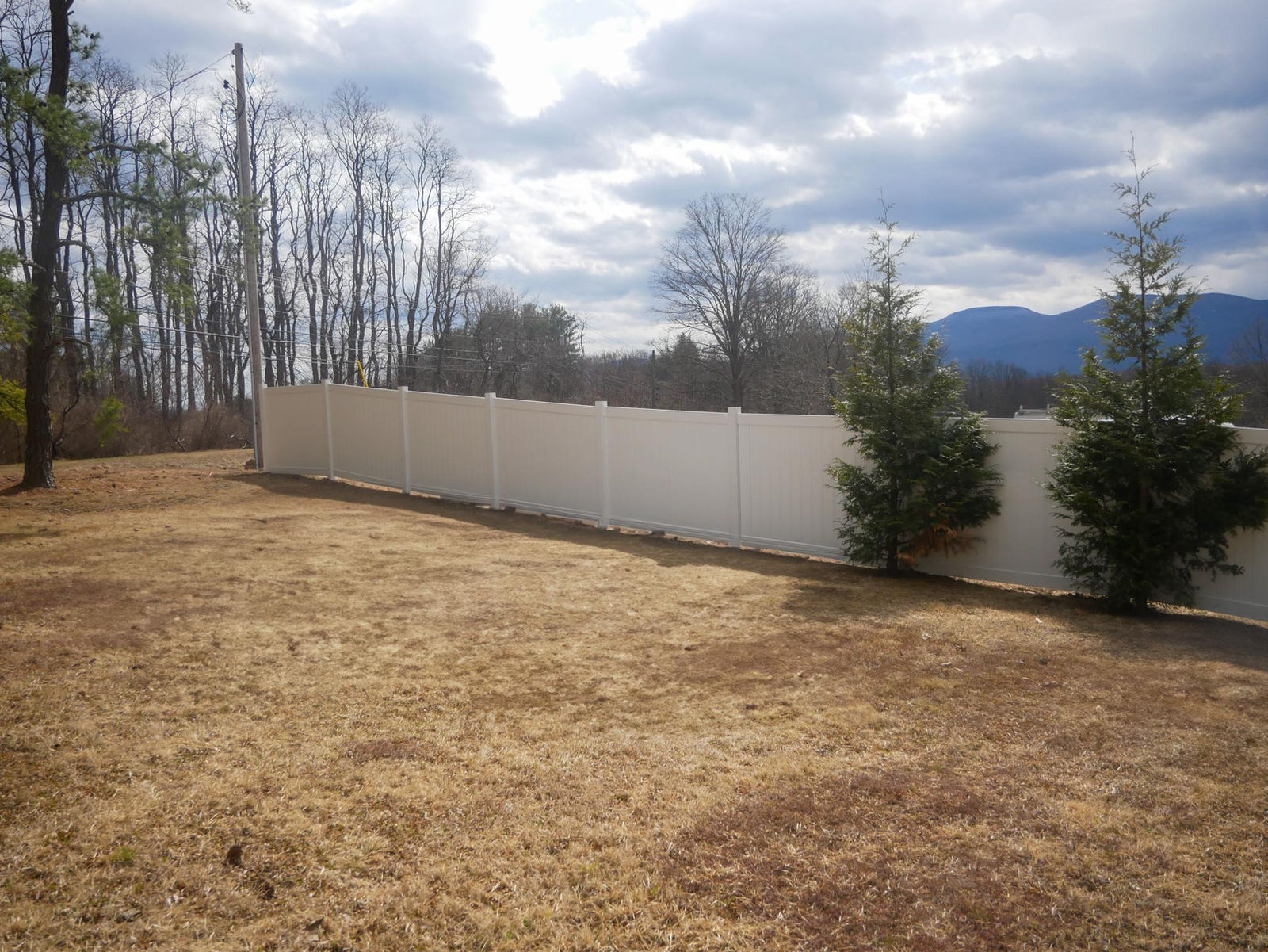
"How much is a fence going to cost?" is the first question almost every homeowner asks us — and the honest answer is that it depends on your yard. But you shouldn't have to wait for an estimate to know whether you're in the right ballpark. This guide lays out realistic 2027 planning ranges for the most common fence types we install across Albany, Saratoga, Schenectady, and Greene counties, plus the local conditions that move the number.
2027 Fence Cost by Material (Installed, Per Linear Foot)
Fencing is priced by the linear foot — the total length of fence line around your yard. Here's what to expect for the materials we install most often:
| Fence Type | Typical Height | Installed Cost / Linear Ft | Expected Lifespan |
|---|---|---|---|
| Chain Link (galvanized) | 4–6 ft | $15 – $30 | 15–25 years |
| Black Vinyl-Coated Chain Link | 4–6 ft | $20 – $38 | 20+ years |
| Pressure-Treated Wood Privacy | 6 ft | $20 – $32 | 10–15 years |
| Cedar Privacy | 6 ft | $25 – $40 | 15–20+ years |
| Wood or Vinyl Picket | 3–4 ft | $20 – $35 | 10–30 years |
| Vinyl Privacy / Semi-Privacy | 6 ft | $30 – $48 | 20–30 years |
| Aluminum (ornamental) | 4–5 ft | $32 – $55 | 30+ years |
| Composite Privacy | 6 ft | $35 – $55 | 25+ years |
Most backyard fences in our area run between 120 and 250 linear feet. That's why two neighbors with the same fence style can get very different totals — the length of the fence line matters as much as the material.
What a Typical Capital Region Project Costs
To make the ranges easier to picture, here's roughly what a 150-foot backyard fence — a common size for a suburban lot in Colonie, Clifton Park, or Niskayuna — would cost in 2027, before gates and extras:
- Chain link (4 ft) $2,250 – $4,500
- Pressure-treated wood privacy (6 ft) $3,000 – $4,800
- Cedar privacy (6 ft) $3,750 – $6,000
- Vinyl privacy (6 ft) $4,500 – $7,200
- Aluminum (4–5 ft) $4,800 – $8,250
Larger rural properties — the kind we see often in Greene County and northern Saratoga County — can easily run 400 to 1,000+ feet, which is where material choice makes the biggest difference in your total.
Gates, Removal & Other Add-Ons
The per-foot price covers the fence itself. These common extras are priced separately:
- Single walk gate: about $350 – $900 depending on material and hardware
- Double drive gate: about $900 – $2,800
- Old fence removal and haul-away: about $3 – $7 per linear foot
- Pool-code gate hardware (self-closing, self-latching): typically $75 – $250 per gate
- Permit fees: set by your town or city and vary widely — see our fence permit guide
Why Fence Costs Vary Across Our Four Counties
We install fences in very different landscapes — from city lots in Albany to hillside properties in the Catskills. Here's how location tends to affect pricing.
Albany County
Smaller city and inner-suburb lots in Albany, Bethlehem, Colonie, and Guilderland often mean shorter fence runs, but more existing fence removal, tighter access, property-line considerations, and front-yard height limits. Permit requirements are common, especially for 6-foot privacy fences.
Saratoga County
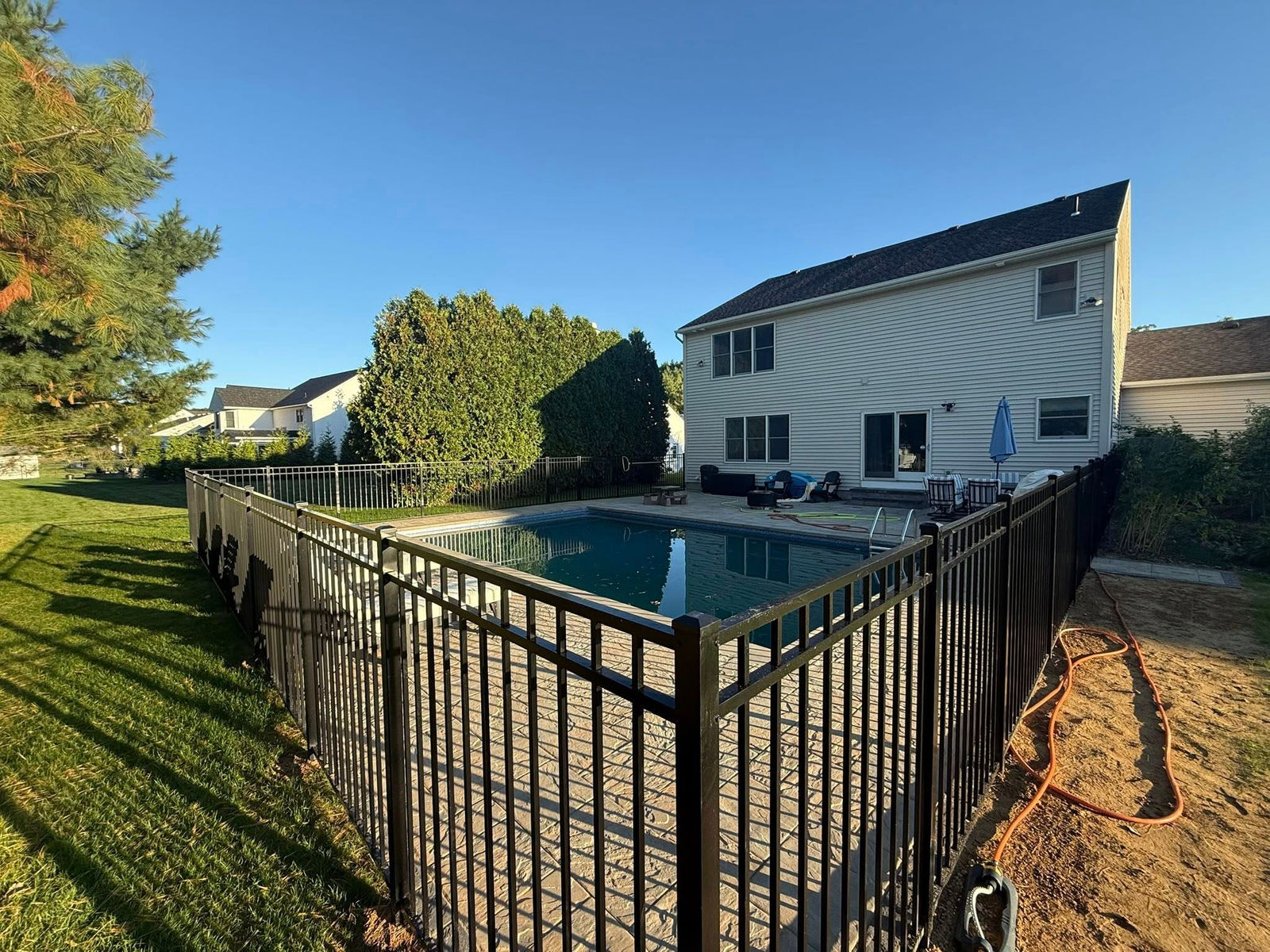
Newer neighborhoods in Clifton Park, Halfmoon, Malta, and Wilton frequently have HOA rules on fence style, color, and height — which can steer you toward specific materials like white vinyl or black aluminum. Pool fences are also a big share of the work here, and they must meet code. Farther north, larger lots mean longer runs.
Schenectady County
In Niskayuna, Rotterdam, Glenville, and the City of Schenectady, we see a lot of fence replacement on established properties. That means removal costs, mature tree roots near the fence line, and older survey markers to work around — all of which can add time to a job.
Greene County
Properties in Catskill, Cairo, Coxsackie, Windham, and Hunter tend to be bigger and more rugged. Slopes, rocky soil, and long perimeter runs are the main cost drivers here. Sloped installs take extra labor to rack or step the panels, and rocky ground can slow post setting. The flip side: on long runs, the per-foot price often comes down.
The Upstate New York Factor: Frost Line & Post Setting
The biggest hidden difference between a fence that lasts and one that leans after two winters is what happens underground. In the Capital Region, posts need to be set below the frost line — roughly 42 to 48 inches deep — so freeze-thaw cycles don't heave them out of the ground. A low quote that skips proper depth or concrete is not a bargain. When you compare estimates, ask every contractor how deep they set posts.
What Could Affect Fence Prices in 2027
Nobody can predict material markets exactly, but these are the things we're watching heading into the 2027 season:
- Lumber prices — wood fencing is the most sensitive to swings in the lumber market.
- Aluminum and steel — metal fencing and chain link follow commodity metal prices and tariffs.
- Spring demand — April through June is our busiest stretch. Booking your estimate in winter or early spring gives you the best shot at your preferred install date.
- Labor — skilled installers are in demand across the region, and experienced crews cost more than weekend contractors for a reason.
How to Get the Most Fence for Your Budget
- Measure first. Sketch your fence line and count gates — it's the fastest way to estimate your total.
- Match the material to the goal. Need pet containment? Chain link or aluminum. Need full privacy? Wood or vinyl. See our fence types page to compare.
- Think long-term. Vinyl and aluminum cost more upfront but skip the staining and sealing wood needs every few years.
- Ask about financing. Spread the cost of your project over time with our fence financing options.
- Get a written, itemized estimate. It should spell out materials, post depth, gates, removal, and permits. Read more in our guide to choosing a fence contractor.
Planning a privacy fence specifically? Our privacy fence installation guide goes deeper on styles, materials, and permits.
Get your exact 2027 price
Free, no-obligation estimates across Albany, Saratoga, Schenectady & Greene County.